I’m Back!

I tried to find a photo online of the “Men’s Clinic” subway ad that I stole the title of this post from, but unfortunately no-one has captured the image of the older guy standing ankle-deep in the ocean, with his business-suit pants rolled up, briefcase in hand, arms thrown into the air in a Victory “V.”   Oh well, it would have been an inside joke for Torontonians who ride the subway, anyway.

I’m truly sorry for neglecting this blog for so long, and more so for neglecting the film.  But I’m here to announce that I’m starting back on the film this week!  Which means there will be, once more, regular blog posts, until the film is done.  I’m making the commitment to not take on any big jobs til then, and have already turned down a couple, which was hard.  But I HAVE to finish the film.

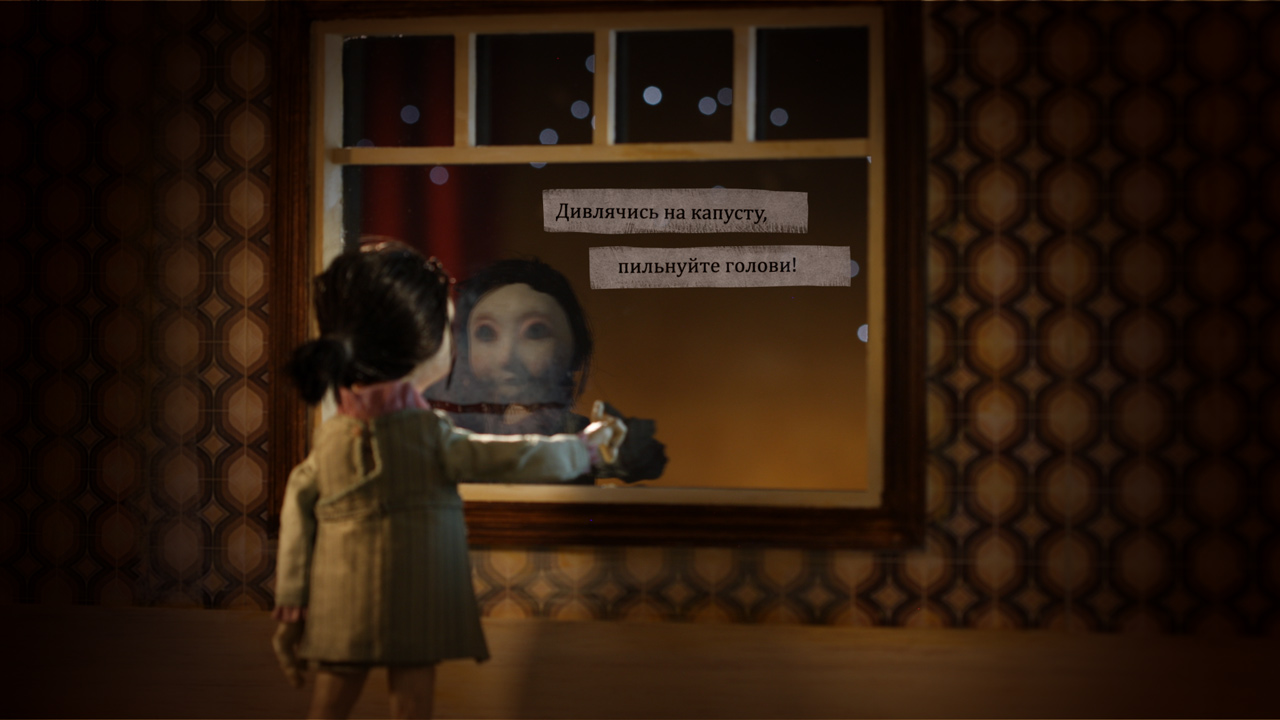
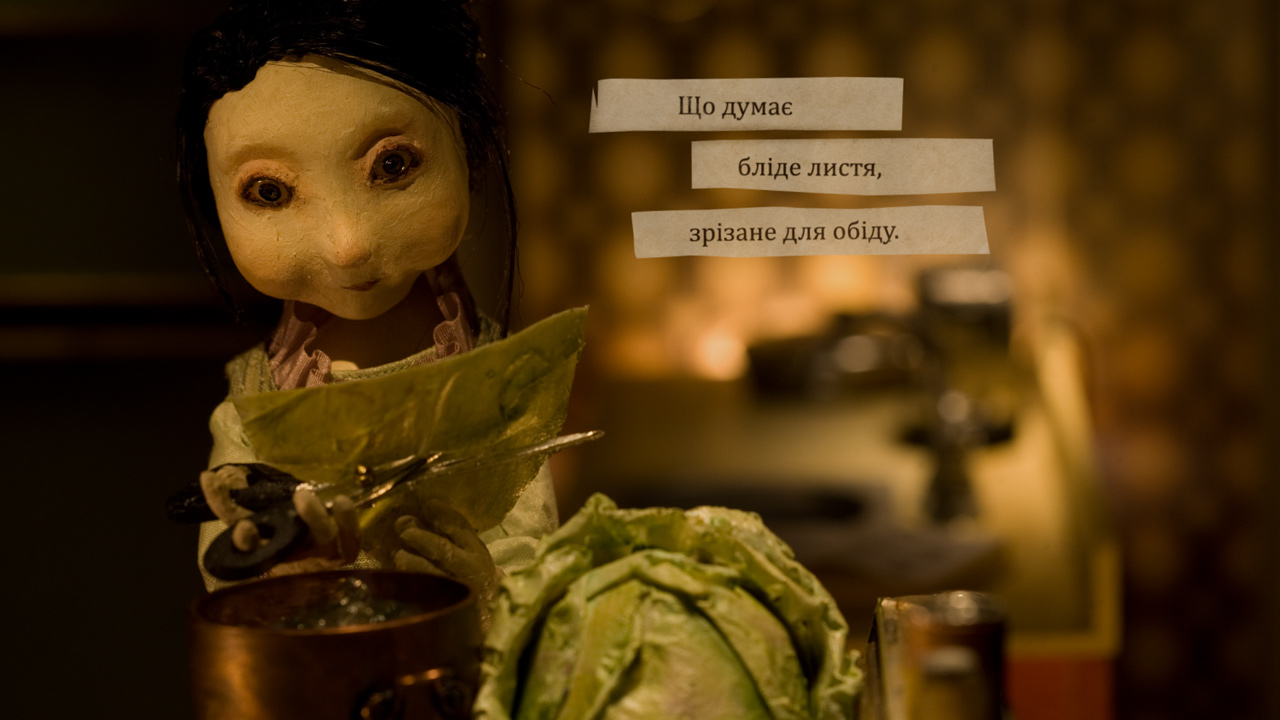
I took on a project a couple weeks ago for my good friend Sean Wainsteim, who is also doing a short for Bravo!Fact.  His is live action, but he needed some short chapter title sequences, which I built 4 vignettes for and animated in stop-motion.  The animation is very simple, but the designs turned out looking great (in my humble opinion!).  It was a lot of fun, and it got me back into the studio again.  I’ll be posting them here next week, once his trailer is online.

In the meantime, I’m starting to sort through all my old files again.  I’ve already done a complete cleanup of the studio, which felt great, as I’d made a huge mess working on Sean’s project.  It’s a little intimidating to dive back into my own film after having had several months off, because it’s really hard to remember where I left off.  I discovered while shooting Sean’s title sequences that I’d completely forgotten everything about cameras and stop motion software and the interaction of the two.  I’d almost completely forgotten everything about lighting, though I did manage to build a small softbox.  But it’s coming back…

Thanks to everyone who’s stayed in touch (Mark, Shelley  — thanks for your beautiful card!, and DarkStrider… thanks for the info in the previous, ancient post…) and to anyone who’s still reading!

PS.  I just upgraded my Wordpress account (which was not an easy undertaking…  yikes.)  So things may be a little wonky for a while.  Thanks.

-->

Abigail

I have already introduced Abigail in a previous post, but thought I would show her again, in her new outfit.  Abigail is the main character, Sabela’s, little sister.

My talented friend Alli Easson made this costume for her.  We had a blast discussing it.  She is supposed to be wearing her favourite outfit — a stretchy jumpsuit which she’s outgrown — and rollerskates.  She’ll be sitting at the dining table, swinging her feet gleefully (though she’s not allowed to wear rollerskates at the table, who could say no to this little face?)  After many attempts, using different fabrics, Alli ended up using this orange jersey fabric, edged with a silver ribbon.

I am just so in love with this little character:

As I took the pictures, I had the strangest feeling that I was looking into her soul…

-->

Planning the Next Scenes

I have to apologize for taking such a long hiatus from the blog (and from the film!).  I was kind of shocked to see that it’s been so long since I’ve last posted.

It’s been a stressful summer, though when I try to explain, it will seem like I am blaming the weather for my lack of posts.  Let’s just say there has been a LOT of rain in Toronto, which has lead to a flooded basement, a constantly flooding studio (no damage though, thankfully… just lots of mud), and some very expensive and stressful house repairs and renovations.  So now, several months later, the rainy days may continue, but we now have a new, clean, dry, mold-free basement, complete with weeping tiles and sump pumps (which I now know more about than I ever wanted to know), and a dry, mud-free studio.  The studio was the last area to undergo repairs, and we haven’t had quite enough rain in the past week to test out the new weeping tile drainage system, so fingers crossed that it all works.  This is the 3rd attempt to repair the water problems in the backyard; hopefully this latest attempt will be the final one!

In order to pay for the construction, I’ve been working my butt off… it’s been great to be working in design again, though I definitely miss working on this little film.

Anyway, I have a couple more big projects to finish up in the next few weeks, and then I will be getting back to the film for a while.

……………………

Between all of this working and dealing with floods and renos, I have some planning for the next sequence of shots for the film.  Marcus and I discussed the action following the previous scenes, and I think he’s come up with some interesting ideas for camera angles here.  The character actions themselves seemed hard to make interesting, so I am glad the camera will add some extra energy to it.

There are two versions of the same sequence of actions, each with their own camera angles.  Here they are (not yet lit properly):

Version 1:

Sabela stands, ponderously holding cabbage.

Cut to a low camera angle, scraping the sides of the cabinets.  Sabela drags a stool out from beneath the counter, places the cabbage on top, and walks towards the stove, carrying the stool with the cabbage wobbling as she walks.

Cut to side shot of the cabinet.  Camera racks focus from foreground objects to behind the pot, as Sabela plops the cabbage down on the stove, and then climbs into view.

Cut to front of cabinet, medium side view of Sabela.  She is kneeling on the stool, getting ready to cut the leaves of cabbage.

Sabela is looking over the pot, cutting leaves, which fall in.  Text appears to her right.

………………

Version 2:

Sabela reacts to cabbage, picks up stool, walks over to stove, throws cabbage onto stove, all in one continuous shot.  The camera pans right and tilts up as she moves across the stage.

Side view of Sabela as she climbs up onto the stool.

Sabela continues to climb up on the stool and cuts the leaves of cabbage into the pot.

I prefer the first version, for a few reasons:  I like the low camera angle, which brings us to Sabela’s height, so we can see her view of the kitchen; also I like the idea of racking focus across the countertop.

I put together a couple of rough animatics, using these camera angles (though it’s a different camera, so the angles are approximate).  This gives me a sense of the timing and pacing of the sequence.

Versions 1:

And, Version 2:

P.S. Huge thanks again to Shelley for sending such a sweet little package of Gel Water in the mail.  I’ll be using the water and bubbles soon, once we look into the soup pot, a couple scenes down the road.

(Now this is the sort of water I welcome into the home :)

-->

Walk Cycle — Check. Plus Lighting Tutorial #2

So, there’s good news about the Walk Cycle dilemma; I went ahead and got the shot done.  It’s done!  Though far from perfect, I’m pretty happy with it.  There were a couple of lighting mishaps that are fairly major, but not unfixable:  LOTS of sudden flicker in those LEDs for some unknown reason; two of the fresnel lights had shifted before the shoot, but can be painted out with a corrected RAW file in post; two of the practical lights didn’t come on when they were supposed to…    And in terms of the animation, the character kind of looks like she’s stumbling.  But at least her walk isn’t as robotic as it was in my test cycles.

This scene was such a challenge!  Not only is the character walking, but everything else is animating onto the set behind her.  Luckily I had a couple of gracious helpers in animating this scene.  While I animated the character and cabbage, Miriam and Alli were animating the set elements and lights.

I can write an entire post on all the meticulous prep-work that went into making this shot.  One cool discovery is that I figured out how to (very simply) make a logarithmic scale of motion using After Effects.  This technique allowed me to chart out movements that had an ease in / ease out to them, or a gradual increase in movement.  For example, I wanted the walls to gradually speed up as they were lowered.  This would have been agony for me to figure out with a calculator (it’s been a while since I learned this type of thing in math class) but After Effects and Excel can figure it out very easily.  (More on this later if anyone’s interested).

The specs of this shot are:

1-second shutter at f/5.6, Canon EOS Mark III with a 45mm tilt shift lens.  The lights were very dim, allowing us to have a wider aperture and longer shutter speed.  The wide aperture was in the hopes of minimizing flicker (which, unfortunately, we encountered anyway) and the long shutter speed was to allow me to move the camera for a nice motion blur on the whip pan.  Because the halogen puck lights that were used in the two softboxes were very dim, we had to dim all other fresnel lights with multiple scrims and ND filters in order to balance this out.

The lighting breakdown is as follows:

1.  Front spotlight on Sabela and Cabbage.  This was a 150W Dedo light, with projection lens attachment, iris, and orange gel.

2.  Back spotlight on Sabela.  To fill in shadow left by light #1.  This was a 150W Arri with narrowly open snoot, also with an orange gel.

3.  Overhead light:  plate shelf.  Pointing straight down, directly above the plate shelf, was a 150W Arri, with barn doors open just a slit.  Flagged to cover just the front portion of the plates.  Warmed up with an orange gel, and dimmed with scrims and ND filters.

4.  Overhead light:  cookbook shelf.  150W Arri with snoot, pointing straight down onto shelf.  Filtered and gelled as above.

5 & 6.  Countertop softboxes.  These were positioned directly above the countertops, and tilted slightly back, so that the light scrapes the front of each cabinet.  These boxes were constructed with hardware-store halogen lights and art-store materials.  (See the tutorial here.)

7.  Chair softbox.  This could have been built the same way as the others, but this one was built quickly with what we had on hand at the time — an Arri.  The box itself was built in the same way, with fomecore, diffusion paper, and an aluminum grid, but it was attached to the barn doors of a 150W Arri.

8.  Pot highlight.  This was another 150W Arri positioned in the front right corner of the stage, pointing back to the stove at a 45 degree angle.  The light was flagged by foamcore that had a 2mm (or so) slit cut into it, to limit the amount of light.  Flagging right next to the light softens the edge of the flag.  The flag (gobo?) was covered with orange gels and ND filters to achieve a subtle glow.

9.  Bounce card on outer wall.  This was to light the wall in an overall way, for the whip pan into this scene.  The card was angled away from set in attempt to avoid any spills into the theatre.  It’s a 150W Dedo with flags open just a slit.

10.  Scallop light on outer wall.  This light is also for the whip pan wall.  It’s a 150W Arri with a snoot, pointing down close to the wall in order to create a scallop effect.

11.  LED backlights.  These are positioned 3-4 cm away from the back theatre wall, between that wall and the 2 walls that are lowered down.  They are animated to dim up as the scene progresses:  at first they are there to create a soft warmth at the back of the theatre; then as the kitchen walls are lowered down, they become backlights, and need to be brightened so they can be seen at the top.  There are 4 strips of LEDs here, with 4 lights on each.  They’ve been warmed up with orange gels.

12 & 13.  Stove light and Window light LEDs.  Again these are strips of LEDs.  The stove light has been warmed up with an orange gel, while the window light is gel-free.

14.  (I forgot to mention this one in the quicktime breakdown below…)  The Pendant light.  This is a tiny incandescent “candle” bulb that I bought at a dollhouse store.  I made the fixture out of various things — I think the round bit was a gourd.  This one also animated up as the scene progresses, though the light wasn’t working for the first 20-30 frames as it comes in.  (Fix it in Post!)

And, nervously, I present you with a rough edit of the three scenes shot so far:

-->

Overcoming the Fear of Walking

I haven’t updated this blog in a while…  it’s shameful!  Even more shameful is that I’ve fallen behind on the film.  Today is a happy day though, so I had to announce it — that I’m well on my way to overcoming my fear of the Walk Cycle.

I can’t believe I have been so hung up on this one shot.  This is probably the only shot in the film that has a walk cycle.  Not only does it have a walk cycle, but it also has many things animating on the stage behind this walk cycle.  So if there is a mistake in the walk, then there is a lot of animation lost.

This shot has been lit for a few weeks.  I’ve had to prep some other things — which is a whole other post that I will get to once the shot’s done — but since the lighting has been finished I’ve also taken a vacation, done some paid gigs, done some work on the house, socialized, and generally done whatever I can to stay away from this dreaded walk cycle shot.

But now the fear is pretty much gone!  I’ve done it!  It’s far from perfect — the stand-in puppet does some moonwalking and stumbling but there’s something about it that is kinda not too bad.  I plan on practicing this a few more times before bringing the real Sabela into the set and animating it for real.  Gulp.

Sadly my magnetic-feet idea did not work for the walking.  At the end of the walk I tried to balance her in a couple of poses with just the magnets, and that turned out OK…  but it was very tricky to get her to walk, with her feet being so tiny and all.  I will have to animate this scene twice — one pass for just the background elements (there will be elements of the set rolling onstage behind her), and one pass with the set elements, Sabela, and her rigging.  I’ll then have to paint out the rigging in After Effects.

So here it is — my First Ever (EVER!) walk cycle.  I did it!  Baby steps…

-->

Chris Landreth Talks about Character Animation

NFB ryan

I went to a talk on Friday featuring Chris Landreth, the writer / director of the 2005 Academy Award-winning animated short film Ryan.  I’ve mentioned this film here before, and how much I love it.  Chris had some interesting things to say about character animation, which, to me, summed up all the reasons why Ryan was so brilliant.  (He also showed us his new short, The Spine, which you can see glimpses of along with some behind-the-scenes footage here.)

Chris talked about his preferred visual style, which he calls “psycho-realism.”   This is where a character’s inner psychological state is represented by their outward reality.  If you’ve seen Ryan then you will immediately understand what he’s talking about here.  If a character is feeling broken and disheveled, he will look broken and disheveled.  Parts of his skull will be missing, and his hair will actively tangle, all by itself.  If a character is psychologically dependent on alcohol, the bottle will reach out to him with little arms.

There was a bit of a eureka moment for me when Chris brought up images of Francis Bacon paintings in his presentation.  I am a huge fan of Francis Bacon as well, and can’t believe I’d never made the connection before. Bacon also imposes his psychological state onto his subjects.  He could have certainly painted “realistically,” but his inner reality spoke far louder to him.

The reason Chris’ psycho-realism works so effectively is that there still IS such a strong sense of realism there.  The animation is so natural, so precise, so detailed (especially in The Spine) that the effects are completely believable, as opposed to being cartoony.  There is a fine line here.  Once you distort the human body, exaggerating features, or playing around with anatomy (taking out someone’s spine, for example), there is the risk of losing this “Francis Bacon” effect.  The reason why Bacon’s paintings, and Chris’ characters, are so effective in communicating their inner states is that there is still a solid hold on something we all know about humans.  The characters are realistic enough, in their appearance and/or movements that we can still relate to them.  (For a terrific explanation of this phenomenon see Scott McCloud’s Understanding Comics.)

However, he also was careful not to get too realistic with the character design.  If you take out someone’s spine or the chunk of someone’s head, and that character is designed in a photo-real style, you run the risk of shocking the audience too much, or making the film impossible to watch.  (Anyone who’s in Toronto who has been to the AGO recently has probably been shocked by the Evan Penny sculpture.  Yikes.)  This, Chris explained, is commonly known as the uncanny valley phenomenon.

Now, I am not a “trained” animator, so many of the issues he raised were new to me.  I approach animation as a practice in observation of outer and inner worlds: the study of movements, and the study of mind.  This requires both meticulous planning and hypersensitive improvising:  the animator needs to take in some detailed observations on the real world, how things move, how people move, but she also needs to breathe some spontenaiety and aliveness into the character, which takes a particular clarity of mind to achieve.  Chris said the animators on his team never work from dope sheets — ever — but as a stop motion animator you don’t get endless amounts of keyframe tweaking, so I feel there needs to be some sort of dope sheet planning.  There are not unlimited chances to refine the movements.  So to me there’s an art — a definite challenge — to this quality of being both “in the moment” and to being tediously obsessed with well-researched details.

Chris described three common pitfalls for character animators.  The first was pose-to-pose acting.  As a practice, he sets up visual clues for his team in attempt to rid them of the pose-to-pose method of animating, favouring more of a method acting style.  Early animation, pre-Disney, used to do this:  the character goes into one distinct pose, then another, then another.  He showed us a juxtaposition of two clips that he typically shows his animation team:  one from a 70s production of The Merchant of Venice, starring Laurence Olivier; the other a 2004 version of the same scene, with Al Pacino.  Laurence’s acting seems a little cheesy in comparison — sorry, I don’t know how else to describe it — very blocky and staccato and exaggerated.  The contrast is so extreme — Al flows effortlessly through his movements as he speaks and somehow this just translates as being more modern, more naturalistic.  It doesn’t seem like he’s acting, though his movements are just as expressive as Laurence’s.  There’s a casual quality to it that makes it more believable as a non-staged event.  So, while pose-to-pose animation may have its place, Chris prefers the smooth natural flow of a method acting approach.

To achieve this sense of flow, the animators filmed themselves acting out the characters movements, over and over again.  And studied them.  In mind-boggling detail.  (Check out some behind-the-scenes footage of The Spine to see some of what went on here… very interesting!)

The second thing the animators had to watch out for was what he called “twitching meat.”  This is perhaps something more applicable to CG animators, since stop motion is plenty twitchy enough — but generally he was talking about the easing in and out of moves, and motion curves on a graph, that should never be perfectly smooth — we all move with synapses firing off left and right, and so our moves are not mechanical or direct.  Sometimes we hesitate, waver, and twitch.

And finally the third detail for the animators to think about was saccade, or tiny eye movements.  When in conversation with someone, our eyes are always flitting about, never just focusing on one spot, but examining a whole scene, or a whole face.  Our eyes, too, reflect an unease, in the mental disturbances which ebb and flow.  Our minds are rarely perfectly still.  The more nervous and unfocused a person’s mental state, the more their eyes flit about.

The Spine will apparently premiere at the Toronto World Wide Short Film Festival, and will be travelling around to various international festivals this summer.  Be sure to check it out — I don’t have any comments on it, because I only saw it once, and on a tiny screen; all I can say is that it is complex.  And that it’s difficult to watch, as Chris freely admits.

-->

Hard vs. Soft lighting, and How To Build a Small Softbox

Marcus and I have finished (more or less) the lighting setup for the next shot of the film:  the intro to the kitchen, above.  It was a crash lesson for me in the differences between hard and soft light.  I mean, I vaguely understood the difference before, but this setup made it clear what works best for small, intricately detailed sets.  (For some great little tutorials explaining hard light vs. soft light, try here, and here, and here.)

The verdict (for now) is:  small, controlled soft lights work well for larger spaces of gentle, moody lighting, while tiny pools of hard light work well to accent specific textured areas.  The key here is keeping ALL light sources small and controlled.  Most of this set is lit from above, which is what would happen anyway (pretty much) in a real theatre, but also it allows the light to scrape the surface of the items in the set, showing off their textures well.

The problem as Marcus described it is that our small 150 Watt fresnels are designed to light up sets at their regular, real-world scale.  If you were to scale up these lights along with the kitchen set to match the kitchen’s real-world scale, the lamps would all be at least a foot in diameter.  That’s pretty big for all the moodiness, subtlety, and texture we wanted to achieve here.  The soft lights (made by bouncing hard light off a large piece of white foam core) we had used in the last setup don’t work well in this context, because they would be too hard to control.  There would be too much spill to where you don’t want any light, creating too much ambience.

So we went for two solutions to the problem of overscale lighting.  We either used snoots on the lights, to create the smallest of spotlights, or, for lack of snoots, made flags as close to the light as possible, so that the lights only emit through a tiny area.  (When flags and gobos are close to the light, they create soft shadows; when further away from the light, the shadows get harsher.)  These were our hard lights (used to bring out some textures, like the stack of plates on the wall.  The harsh shadows caused by the hard light emphasize the linear pattern of the plates.)

For the softer lighting effects above the countertops and lighting the fridge and chair, we built some custom-made softboxes.  We made two versions:  one was attached to a fresnel, taped on to the barn doors like an added snoot extension (for lighting the fridge); and the others (for the 2 countertops) were made using very cheap puck lights from Home Depot, some foam core, and a few other things, which I will explain below.

Here’s what you need:

1.  Lights.

These 120 volt halogen puck lights were very cheap — $19.99 for 3.   They’re dimmable, though slightly warmer than our other fresnel lights, so the other lights needed to be warmed up with orange gels to compensate.  These each had their own power source, which is important — you don’t want the type of puck lights that string together onto one power cord.

2.  Diffusion Paper.

This stuff is just vellum, as far as I can tell.  Just make sure it’s heat-proof.  I’ve read that parchment paper can work for this too, as it’s designed to be used in an oven.

3.  Tape.

I used a layer of aluminum tape that’s usually used for duct work, available at a hardware store.  The advantage to this stuff is that it’s heat resistant.  I also used black duct tape to cover up the shine of the aluminum.

4.  Honeycomb grid.

This was a present from Marcus — it’s been sitting in his garage, unused, since 1984, apparently.  It comes from an airplane hangar?  Or the plane wing?  Or something.  But it’s commonly used in lighting, just for this sort of application.  You can also use the grids that cover those institutional-type fluorescent fixtures — kind of a white plastic grid.  The honeycomb pattern is a little more advantageous, but the square pattern of those white plastic lighting covers will do.

5.  A large-ish sheet of black foam core, 3/16″ thick.  It has to be black, so it contains the light and doesn’t bounce it everywhere.

How to build the softbox:

1.  Cut honeycomb grid and diffusion paper to size.

The size should basically be the area that you want to light, and fairly small.  These lights don’t spread much across the diffusion, as they’re not too powerful — these ones were built to be around 4″ by 10″.  The idea was to have one softbox hovering over each of the countertops, which were about this size.  Tape the edges of the grid with aluminum tape (if they’re sharp metal), and attach the diffusion paper to one side.  This side goes on the inside of the box.

2.  Cut foamcore into shape to make a box.  I cut one large sheet that was the full dimension of my box, 10″ by 22″, then scored creases so that it folded into a box shape.  (Sorry, I didn’t take in-progress pictures!)  So, the final box was going to be 10″ wide, 8″ high, and 5″ deep.  So I knew one side would be 8″, the top 5″, the other side 8″, and the bottom 1″ (to allow for a 4″ opening for the grid.)  Total = 22″ in length.  I then scored one side of the foamcore into these dimensions, and folded it up into a rectangular, open-ended box.

I cut 2 pieces of 8×5 foamcore for either side of the box, and taped all the seams (including the scored ones, to reinforce them) with the aluminum tape.

3.  Measure the diameter of the light casing, and cut a hole.  You could put 2 puck lights per box, depending on how bright you want the source to be.  We used 1 for each of these.

4.  Secure the grid to the open space at the opposite end of the light.

The light shines through this, down through the diffusion paper, and through the honeycomb.  The diffusion paper softens the light, while the grid contains the soft light and prevents it from shining all over the place.

We taped a grip plate to the side of the box, because that was what worked best with the set — we could only put the grip in from the side.

I then covered all the aluminum tape with black duct tape, so that the aluminum wouldn’t reflect onto the set.

5.  Insert the light.

The light should be pretty snug, so that it doesn’t drop into the box.  Then it can be taped in place with a few pieces of the aluminum tape — not too many, in case you need to adjust it.

6.  Carefully poke a few air holes through the top of the box.  These lights will get pretty hot, so it’s important to let heat escape.

That’s it, then rig in place!

Just for comparison — here is my original, lame attempt at lighting this same set.  There is some soft light on the fronts of the cabinets, making lots of ambient light, and soft shadows, but not really being controlled well.  Then there’s a hard light lighting the fridge and chair in the corner — hard frontal lights create ugly harsh shadows.

In fact, if you just compare that area of the set, you can see the difference between hard and soft light.  The image on the left has a 150 watt Arri directed at the fridge, and on the right is the final lighting setup, where this corner has been lit by a small foamcore softbox.  It’s a tricky comparison, because some other things changed — the focus, for example — but you can see the difference in the quality of light and shadow pretty clearly (click to enlarge):

I’m off to Vancouver and the BC islands for a couple weeks, surfing, hiking, and yogaing, but I’ll do a more detailed post on this lighting setup when I get back.  It’s a good one — lots of lights, flags, and the new softboxes!

Happy Spring!

-->

Lighting Breakdown for Scene 14

As promised, I’ve documented the setup for Scene 14, which is the one following the Amelie-like shot of Sabela looking out the window. Here we see her from the other side of that very same window. What started out as a simple 7-second shot somehow turned into a mammoth lighting and dolly setup that took about 2 weeks to design and build.

I’ve made a video and some panorama collages of the setup, in the attempt to explain what’s happening there lighting-wise. The info is second hand from Marcus, remembered and repeated with 90% accuracy, guaranteed :)

It’s 10 minutes long, but be sure to watch til the end, where I show a little timelapse of the lights turning on sequentially to light the scene, so you can see what each one is doing.

We used a total of 11 lights on the scene. Three Dedos, eight Arris — all 150 Watts.

The Breakdown (more or less in order of how they were added to the setup):

1. The Main Light: Dedo with barn doors, orange gel. This is the warm side light to illuminate Sabela and the window wall. The light bounces off a large white foam core card: the card is the light source here. (Bouncing lights off cards helps to soften them in such a small, delicate set.) The light is flagged by four pieces of foam core, which help crop the light into a vignette on the wall, and limit the light on Sabela’s legs, so that they fall off into darkness at their base. (We will have to bring back this vignette effect in post, as some of it was lost when lights #9 and 10 were added at the end… Those two bounce cards spilled a lot of light everywhere, which you can see happening in the timelapse at the end of the video above.)

2. Special Dedo. This light has a projection lens and iris unit, which allows us to have a precise spotlight on Sabela’s face. The light is filtered through a diffusion gel to soften its edges, as well as a pinkish-orange gel, as her face was looking a little sickly green without it. (Maybe because of the green hue to the glass?)

3. Blue Gel Arri from Below. This one shines up onto a piece of white foam core on the outside of the wall, opposite to the orange foam core of the main light. This bounces to create a soft blue moonlight on the outer wall, as well as a 3/4 backlight to Sabela’s face. It also helps fill the shadows created by the Main Light.

4. Back Blue Gel Arri. A light shining through a flicker rig, as well as diffusion paper-backed black wrap. The black wrap has been punctured with strategically-placed and -sized holes, creating a small starfield in the window.

5. Far-Away Dedo. This orange-gelled light has barn doors that are open about 1mm, just creating a soft-edge highlight on the red theatre curtain, which is reflected in the window.

6. Line of 4 LEDs. These are lined up at the back of the theatre set, out of sight. They are placed about 5 cm from the back wall of the theatre, and cast a gradated glow there. Since LEDs tend to be cooler than incandescents, we’ve added orange gels to them.

7&8. Pair of Arris with snoots. These are placed at a sharp angle above the extra theatre wall to create two scalloped beams scraping down the side of this wall.

9&10. Two foam core bounce cards (lit by another pair of Arris). These fill in the details of the wall that weren’t lit by the scallops: the wood below the chair rail of the wall, and the wallpaper detail to the right of the scalloped lights.

11. Hair Light Arri. This was brought in at the end of the lighting design process: the finishing touch. The back of Sabela’s head was getting lost in shadow; it seemed like she needed a highlight in her hair to add some dimension to her head. The light is flagged to avoid spillage onto the window frames.

The Star Field (& Apparatus):

To animate Sabela more easily, and — particularly — to add and remove her eyelids when she blinks, Marcus suggested using a piano hinge to rig up the window wall. This way the wall can lift up between shots, making Sabela more accessible. The hinged wall locks into place with rare earth magnets at the base, ensuring that it lands in the exact same place every time.

High fives to Marcus for his awesome lighting job on this one!!!

Now to tear it all down…

*Edit* — Here is the shot itself, pre-post FX.

-->

Gregory Euclide

Here is some interesting artwork by Gregory Euclide.  Love the way he treats the 2D image, crumpling and bringing the landscapes into self-awareness by adding clearly out-of-place materials to them…

-->

Coraline

I received two very special pieces of paper this past week.  One was an animated card (a Phenakistoscope) from Shelley Noble — it’s so impressive to see a little card that animates like that!  So well done.  Thanks Shelley!

The second little piece of card was an advance screening pass for Coraline.  I was SO EXCITED to see this show last night that I waited in line an hour and a quarter before it started… and it was a very full house, so I’m glad I did. Chris Landreth (writer / director of Ryan) was there to introduce Neil Gaiman, who in turn introduced the movie and did a Q&A at the end.  I wish there could have been a whole second Q&A for Chris Landreth, but oh well.

I can’t really even describe how much I loved this movie.  So I won’t.  It’s very rare that there’s such delight in the visuals of a movie that tears come to my eyes while watching, and though it’s incredibly cheesy to say, that’s just what happened.  Several times.

The story was amazing, the visuals absolutely magical, and the animation, well…  I feel partly depressed and partly inspired, I guess.  The only thing is, if anyone is reading this, you MUST go see it at a theatre in 3D.  The 3D just adds so much to the experience, and the film is really designed to be seen that way.  Apparently here in TO it is only on 3D screens for the next 3 weeks, as some other silly 3D movie is coming out to take its place.  It’s unlike anything you’ve ever seen before (stop motion in 3D!)  Go see it!!!

-->
Next Page »